
“But I can’t even doodle,” you said.
“Of course, you can.” And I gave you the stink eye.
“Get a piece of paper and a nice pen. That one, with a gel tip.”
Creativity sleeps in every one of us. You just have to wake it up.
Read on and find out how.
“But creativity is for a select few,” and there they were: your teary eyes.
That’s a crazy statement.
Creativity is a mindset and a way of approaching the world that can benefit everyone; It’s about
- thinking differently,
- finding unique solutions, and
- accepting that imagination is powerful.
Picasso’s early works were considered mediocre, but he explored different techniques and styles until his fingers bled and became one of the most influential artists in history.
Edison’s countless failed experiments led to his groundbreaking inventions, like the phonograph and the electric light bulb.
These examples debunk the notion that creativity is dependent on natural talent.
Believe in Your Creative Potential
Have you ever watched Ted Lasso? It’s an Apple TV show that tells the story of an American football coach hired to manage a declining soccer team in England.
He had a rocky takeoff.
Ted didn’t know much about soccer, but he did know tons about motivation. He was kind and empathic, and one of his first acts was to place on top of the door to his office a huge sign that said:

It wasn’t big; it was made of paper. However, every player took a look at it before a big game. And every player started to believe. By the show’s end, they had matured into a team to be reckoned with.
Believe that you can think differently and develop innovative ideas in your personal life and work.
Start by feeding your curiosity and allowing yourself to explore new ideas, experiences, and perspectives. Even if you think they won’t benefit you.
Be a child (Be a baby)
We nurture our creativity when we release our inner child. Let it run and roam free. It will take you on a brighter journey – Serina Hartwell
- Make your office a real-life Notion, and start by collecting clips and cuttings from real-life magazines. — they still exist; you know that, don’t you?
- Plaster all these things around your desk and office walls. Be naughty.
- Have fun.
- Designate a dedicated space for your creative thinking. I sometimes go to a bookshop to look at the books. Just roam among them, touching them, smelling the paper. That space of time and place, works wonders.
Remember, the right environment can unlock the door.
Practice Mindfulness and Reflection
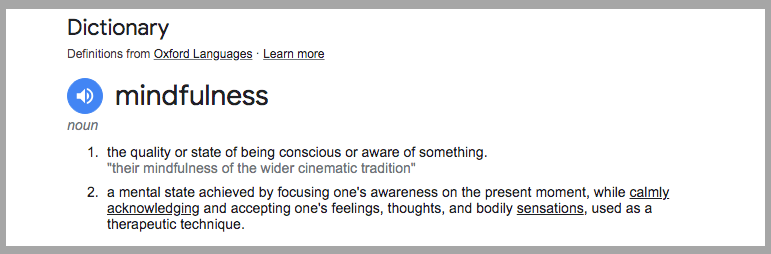
Mindfulness lets you quiet the noise and connect with your inner creative self.
Everything groundbreaking you learn, you’ll have to practice before reaping any benefits. But there will be an aha moment when you’ll feel all these hundreds of ideas clobbering your brain like there’s no tomorrow.
“Stress is a well-known creativity killer, Time constraints are another. When you’re in graduate school, there are so many constraints on you. It’s detrimental to creative expression.”
Robert Epstein Ph.D., The Big Book of Creativity Games (McGraw-Hill, 2000).
Despite the widely held belief that some people just aren’t endowed with the creativity gene, “There’s not really any evidence that one person is inherently more creative than another,” Epstein says.
Meditation and reflection are stress murderers.
I know what I’m telling you.
The American Psychological Association’s site gives you some additional tips from Epstein:
Seek out challenging tasks. Take on projects that don’t necessarily have a solution—I’d love to explore if dogs can think.
Surround yourself with interesting things and people.
Block out time to be in the company of people who challenge you to think. Get together with people with different skills and perspectives and learn from them.
Capture your new ideas.
Everywhere I go, I carry a tiny notebook—it’s solely reserved for jotting down quotes, stories, experiences, or anything I find in my day that tickles my brain. If you’re a writer, that’s a reservoir of material. Writer’s block? Nah.
A quick story can become a blog post that helps promote your business. A doodle or sketch might help you make sense of a data set that doesn’t work.

Photo by Shvets production @pexels images.
Do the same thing, different.
So, try to mix it up! Tomorrow, take a new route to work. Instead of the typical 45-minute workout you do, take a dance class. Just to stimulate your gray cells.
Never say never again
That was a line from the Bond movie “Thunderball,” It’s not precisely what I wanted to say here, but I thought it looked cool.
What I meant is when someone proposes a crazy idea. You’ll want to say no.
Don’t.
Stop for a moment and bite your tongue. Hear the other out. Consider something different to say, even if you choke on the intent.
Many practices that lead to better overall well-being also boost innovative thinking. For instance, creativity researchers suggest you:
Sleep well.
In a 1993 study at Harvard Medical School, psychologist Deidre Barrett, Ph.D., asked her students to imagine a problem they were trying to solve before going to sleep and found that they were able to come up with novel solutions in their dreams.
“We’re in a different biochemical state when we’re dreaming, and that’s why I think dreams can be so helpful anytime we’re stuck in our usual mode of thinking.”
Deidre Barrett, Ph.D.
An article written by Steven Kottler titled 3 science-based strategies to increase your creativity sheds more light on the matter:
Exercise.

Working out lowers stress levels, flushing cortisol from our system while increasing feel-good neurochemicals, including serotonin, norepinephrine, endorphins and dopamine.
This lowers anxiety, augments our good mood and amps up the part of the brain that is able to detect more remote possibilities. Plus, the time-out that exercise provides works as an incubation period.
Gratitude, mindfulness, exercise and sleep are nonnegotiables for sustained peak performance.
When life gets complicated, we often remove these four practices from our schedule.
But when life gets complicated, you have to be contrarian and lean into these practices to get the creativity needed to untangle a Gordian knot.
Or whatever knot is messing with you.
I consider myself creative, and I rely on that.
Not good.
Because I can get stressed out trying to do too much, and my creative thinking pays the price.
Drumroll for “Non-time”
Despite the fact that it may be a new phrase, greats like Einstein, Jobs, Darwin, and others have used the term “non-time.”
“The most visionary leaders block time for unscheduled time. Jeff Bezos famously kept two days unscheduled to explore the internet and seek fresh opportunities. (And not just when they were a scrappy startup — he did it when Amazon’s market cap was 17 times that of Barnes & Noble, widely considered their primary “competition” at the time).”
Harvard Business Review
Journalist, writer, and speaker Steven Kotler, who authored The Art of Impossible, 2021, coined the concept of “non-time” to say it is
“time for daydreaming and psychological distancing,” and allows “our subconscious to find remote associations between ideas.”
It may seem like a vast space to some. A complete blackness that only I can call my own.
Creativity needs this non-time.
And it’s not just non-time — The American physicist and writer, Alan Lightman, talks about time spent with no one.
There is much to be said about collaboration when we’re talking about ideas, but the incubation phase requires time with yourself.
Alone.
I’m not very good at this because I can’t leave my dog behind when I want some no-time-walks because she’ll throw a tantrum by barking and howling until I pay attention. So technically, I’m not alone, but I find my best ideas come from those outings and I make Tapita very happy.
A 2012 study by psychologists at the University of Utah found that subjects’ scores on common creativity tests increased by 50% after spending four days alone. Try this for a bit.
I will wrap it up quoting from the writer of the #1 bestseller Atomic Habits:
“Keep leaning your head against a topic for a long time. Certainly for weeks, possibly for years. And along the way, try many lines of attack. Continue to generate options, explore paths, and propose silly ideas. Copy and paste concepts from widely different disciplines and see if it gets you anywhere. All the while, continue to refine the best solution you’ve found thus far.
What looks like genius may simply be the byproduct of persistence and variety.”
James Clear
I love that last line.
Cheers.
 The Analytical Wordsmith