Copywriting and psychology come together as a dynamic duo. Think of Thor and Iron Man. They’re not battling villains or solving crimes. They’re throwing in words that captivate the minds of consumers and leave them ready to buy.
There’s a connection between copywriting and psychology. Let’s explore how they collaborate to influence our choices and behaviors in many ways
The Mind Games of Persuasion
Copywriting has to do with emotions. In that sense, copywriting’s sidekick is psychology, because emotions are a significant study area within it. Psychologists study how people experience and express emotions and how they affect behavior and mental health.
And understanding emotions is important for writing good copy.
This morning, you found your inbox flooded with emails with links that looked fishy.
You know, because your IT guy had walked you through what a phishing attack looked like earlier that morning. So nothing happened.
Lack of safety is an emotion that brings you back to your primal fears. A sense of insecurity that threatens your survival.
By coincidence, there was an email about Skiff, a provider of encrypted mail services, elsewhere in your inbox.
You immediately wanted more information. You had a problem; you needed to solve it. Here was the solution, and you clicked.
This is the power of copywriting. It triggers an emotional response.
It makes you do things you wouldn’t have if you hadn’t read the content that spoke to you. Then and there.
Emotions rule human lives most of the time, and when a piece of writing addresses your inner feelings, you’re done. Dead. You say to yourself: “This product gets me. It speaks to me.”
Click.
Because we’re not rational beings.
A simple line like “Help save a child’s life” does more than tug at your heartstrings; it yanks them with the force of a thousand hurricanes.
Emotional appeals spark action. Copywriting is the art of harnessing these triggers.
I remember the first time I read a sales letter, It was pitching a cream that would erase my wrinkles in less than a week. I clicked because I was feeling old and looking for something to help.
Studies have shown that emotions are central to decision-making. Deep feelings influence our choices. Our brain processes emotional responses faster than rational ones.
This is why generating emotions is a must in copywriting.
Because, as copywriters, we can turn a casual browser into a devoted customer by striking the right emotional chord.
Only Today? Only three?

Now, let’s talk about scarcity—a psychological phenomenon that turns us into mad shoppers.
Ever seen a “click now” or “only 3 left in stock” message and felt a sudden urge to buy?
That’s psychology playing mind games with you.
Copywriters use scarcity to create a sense of urgency, making your lead think, “I need this NOW!” And you click.
The psychology of scarcity is also rooted in our evolutionary history.
Back when our ancestors were hunting and gathering, resources were limited. This drive for what’s scarce or exclusive continues to influence our decisions today.
When we perceive something as rare or in short supply, our brains push us to act, fearing to miss out.
The Curious Case of Social Proof
Have you ever chosen a restaurant because it was packed with happy diners?
That’s the call of social proof—a psychological quirk where we follow the crowd, especially when unsure of our choices.
Have you ever NOT entered a restaurant because it was half empty?
Guilty.
Copywriters wield the mighty sword of social proof by showcasing testimonials and endorsements.
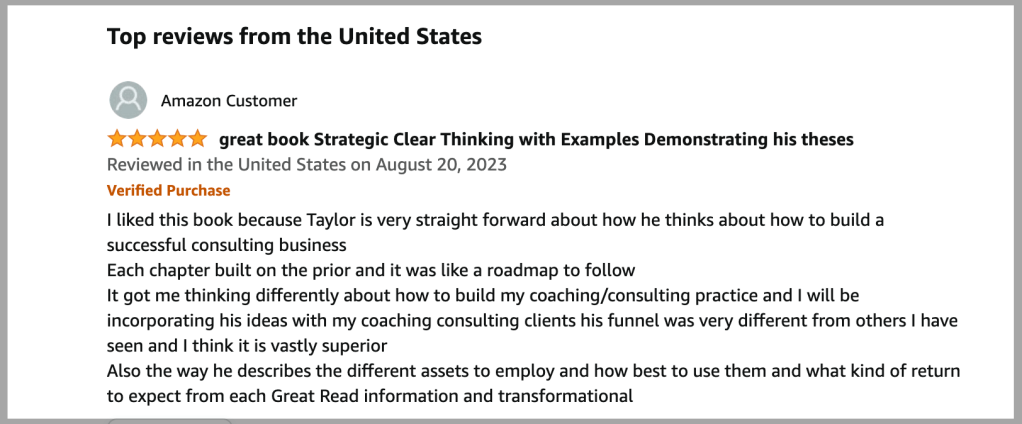
When shopping, we always ask for recommendations. You go on Amazon to find a product. You find it looks good, but before buying, you read the reviews on how the product has served others.
You’re likely to trust and buy the product when you see that they have taken the plunge and emerged triumphant.
Because the crowd’s collective wisdom has given its blessing.
While FOMO is ingrained in our evolutionary history, social proof is imprinted in our nature.
As gregarious creatures, we rely on the judgments and actions of others to navigate the complexities of life.
The Power of Once Upon a Time

Stories. They whisk us away on expeditions of imagination and emotion. Good copywriting is synonymous with gripping storytelling.
Look at the journeys of companies like Starbucks and Apple. Humble beginnings, struggles, and eventual triumphs. Their stories make the brand appear human and forge an emotional connection with you.
Stories open the brain’s ability to empathize and connect with characters and situations.
When you read a fascinating story, your brain releases oxytocin, often called the “love hormone.”
This hormone fosters trust and empathy, making you more receptive to the narrative and message.
The Grand Finale

Now, every spell needs a bang. In copywriting, that’s the call to action (CTA).
This is where telling tales and the science of psychology combine to create a Godfather Offer—remember Don Corleone?
Alex Hormozi, in his book 100M Offers, speaks of this. Such a proposal is one that is designed to provide unmatched value to customers, making it irresistible. One that makes your lead click.
After all the emotional triggers, scarcity tactics, and storytelling, the CTA is the crescendo that compels you to act.
A well-crafted Call To Action nudges you—sometimes hard—toward the desired action. Whether your lead is buying, subscribing to a newsletter, or sharing a post.
The final flourish that leaves you awaiting the next act.
In the marketing world, where the battle for attention rules, copywriting, psychology, and a Godfather Offer emerge as the perfect team.
The next time you stumble upon an irresistible product description or a persuasive advertisement, remember the secret—it lies in the fusion of copywriting, psychology, and an offer no one can resist.
They’re the dynamic trio that wields the power of words to influence hearts and minds,
And in this partnership, the real magic happens.
 The Analytical Wordsmith