

Don Draper, together with others like Danaerys Targaryen and Tony Soprano, is one of prime-time television’s most relevant characters ever created.
Don is a brilliant copywriter known for his groundbreaking work. He weaved his way into the life of Sterling Cooper after taking the identity of a fellow soldier in the Korean war.
This character helped me illustrate how copywriters, especially solopreneurs, battle their fears.
Because, like many of us, Don is a flawed person with many inner demons. Of course he had too many. Not all of us come from such a difficult upbringing.
Our demons

Photograph by Kat Smith @Pexels.
Not being good enough therefore not finding enough work
We often have high standards for ourselves and our work. Don is constantly striving to be the best copywriter he can be, but he is also haunted by the fear that he is not good enough.
You might be scared of not finding enough work. But, while copywriting is a crowded pond, the best fish always rise to the top.
According to the Census Bureau’s Business Formation Statistics report, 5.4 million new businesses were formed in the United States in 2022. This means an average of 450,000 new businesses formed each month.
The majority of these new companies can use a good copywriter. Find a niche and have your portfolio ready to rock. Do your best work and never stop learning.
Remember, the best fish always rise to the top.
You may be afraid of falling behind or becoming irrelevant.

Copywriting has been around for thousands of years, but it wasn’t until the invention of the printing press in the 15th century that it began to evolve into the profession we know today.
The earliest known example of copywriting is a Babylonian clay tablet from around 1477 BC that was used to promote the sale of a prayer book.
The tablet used imagery to convince potential customers that the prayer book would help them to achieve their goals and desires.
In its early day, the main goal was to inform potential customers about products and services.
However, as the marketplace became more competitive, copywriters focused on persuading customers to buy their products or services.
Today, you still have to inform, but when selling a product you must add to its features, how they can change your clients’ lives, and your words must be creative and persuasive encouraging your reader to take action.
Copywriting is constantly evolving, and you need to stay up-to-date on the latest trends and technologies in order to produce good work. Learn the basics of SEO so you can spruce up any old content that is in the bottom of the pile.
Practice, practice, practice.
Working with every kind of client
You might have to work with clients who have different needs, expectations, and communication styles. Who might be difficult or unreasonable.
Set clear expectations with them from the beginning. Get a contract in place and avoid misunderstandings and conflicts later on.
Even if you’re dealing with someone… complicated, it’s important to be responsive and professional. At the same time don’t be afraid to say no.
If you see a project that’s not a good fit for you, leave.
Because It’s better to focus your time and energy on assignments you’re excited about and which you can do an excellent job on.
Be careful with your deadlines. Instead of worrying that you won’t be able to meet them, talk beforehand to your client and ask for an extension. If you do it soon enough, the client will be happy to accommodate.
While on deadline watch, take breaks.
Are you crazy?
I see you. It’s hard to extricate yourself from the screen when your day of delivery is tapping your shoulder.
But taking your dog for a short walk will clear your mind and you’ll come back to write faster.
Taking a distance from your words is magical.
Trust me.

I’m not that good, and they’ll find out.
Imposter syndrome is a psychological phenomenon in which people doubt their skills, talents, or accomplishments.
Despite external evidence of their competence, those with impostor syndrome remain convinced that they are frauds and do not deserve all they have achieved.
Getting back to our character, it is safe to say that Don Draper suffered from Imposter Syndrome.
Really?
He was an imposter. For real.
Born Dick Whitman, he stole the identity of Don Draper, a man killed in the Korean War, to start a new life and avoid his difficult past.
And, he lived in fear that someone would blow his cover. Constant fear.
This is to tell you that if he could pull it off, so can you.
There are a few ways in which Don Draper dealt with his imposter syndrome.
First, he tried to ignore it.
He convinced himself that he was good enough and that he deserved all he had achieved.
He was a brilliant copywriter and knew about human behavior like few people.
So, telling himself that he was good enough wasn’t too tricky.
He compensated by working harder than everyone else.
Just like you. I hear you.
Fake it until you make it. You’ll find strength in this.
Befriend your fears because once you’ve conquered one, another one will pop out. Acknowledge them and look them in the eye, chin held up high.
Success is sabotaged more by the act of being scared than from not being good at what you’re doing.
Focus on your strengths and accomplishments. You’ll find you have enough.
That you are enough.
Everyone makes mistakes.
It is okay not to be perfect.
You don’t have to be.
You are not alone.
Here is an example of how Don Draper’s fear of exposure showed in the episode “The Suitcase”:
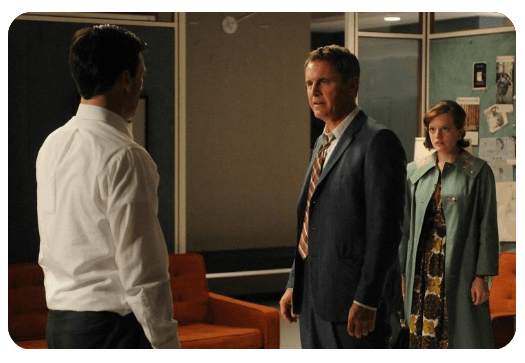
Don is hired by a client to create an advertising campaign for a new suitcase type. Don is immediately drawn to the project, seeing the suitcase as a symbol of his transformation from Dick Whitman to Don Draper. The resulting design is stylish and functional, and he pitches it to his client.
The client is impressed and he approves the campaign. Don begins working on it. He puts in long hours and constantly comes up with new ideas.
One day, while Don is working on the campaign, he has a flashback to his childhood. He sees his father being murdered and remembers stealing his father’s suitcase. Don is shaken and obsesses about his true identitybeing exposed.
This leads him to make several mistakes. He starts drinking heavily and becomes increasingly erratic. He also starts losing his deadlines.
At the end of the episode, Don presents the advertising campaign to his client. The client hates it, and fires Don.
Bummer.
What now?
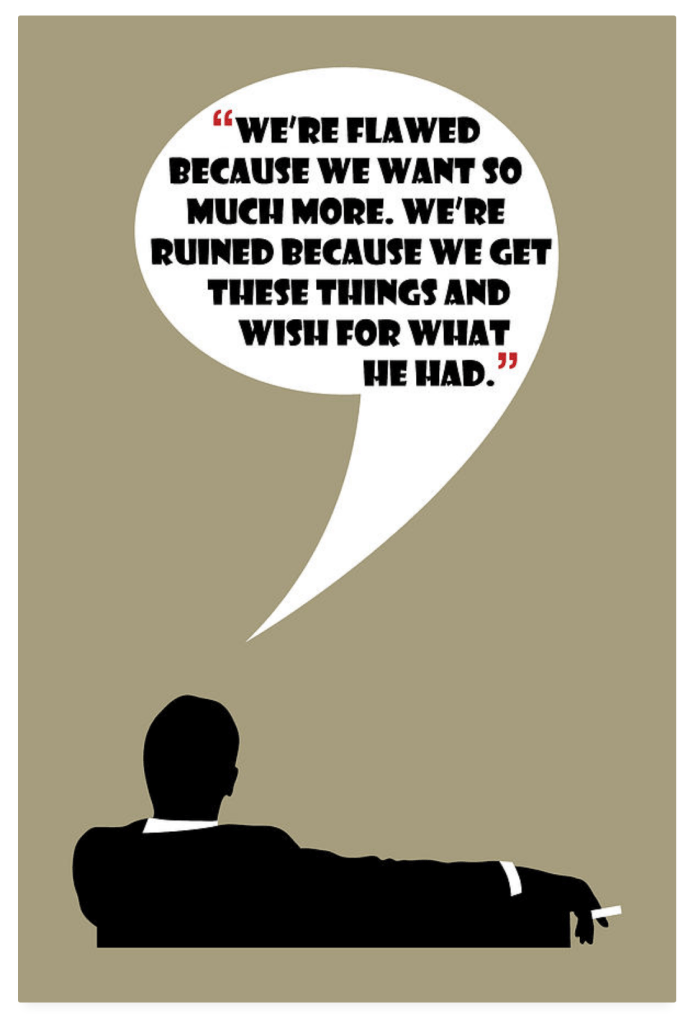
Don managed his fears, compartmentalizing his life.
His private world was one and his work was another department. His troubles were different, and they were kept in different drawers.
Finally, Don Draper relied on the support of others. He had a close friend in Roger Sterling, who knew all about his true identity.
And had a therapist whom he saw on occasion who helped him understand and manage his woes in a constructive light.
And you?
Network with other copywriters and industry professionals. For example, attend industry events, join online communities, and connect with people on LinkedIn. Read here about 2024 events (UK.) Or this one in the U.S.A
Mistakes. Don’t hide from them because they’re fantastic teachers.
Get feedback from others. Gather a small group of peers that can serve as a board of directors. Those whom you can rely on for honest feedback.
Set realistic expectations for yourself. Don’t expect to be perfect right away. It takes time and practice to become a good copywriter.
Create a strong portfolio. It is your best chance to showcase your skills and experience to potential clients. Make sure it includes your best work and is well-organized. Easy to navigate.
Don’t be afraid to contact potential clients and inform them about your services. Learn how to write cold emails that feel fuzzy and warm. Get to know your ICP before reaching out.
You will read that subscribing to blogs and newsletters is a great way to be on top of things.
It can be, but you must be aware that they’re time-consuming and that you might resort to reading great books or subscribing to amazing newsletters because you’re scared of writing.
Beware.
Even though Don Draper never overcame his anxieties, he learned to manage them in a way that allowed him to live a more or less prosperous life.
The last scene of the show’s ending has him meditating —that’s a great resource, by the way.
It’s all gonna be alright.
Write, write, write.
 The Analytical Wordsmith